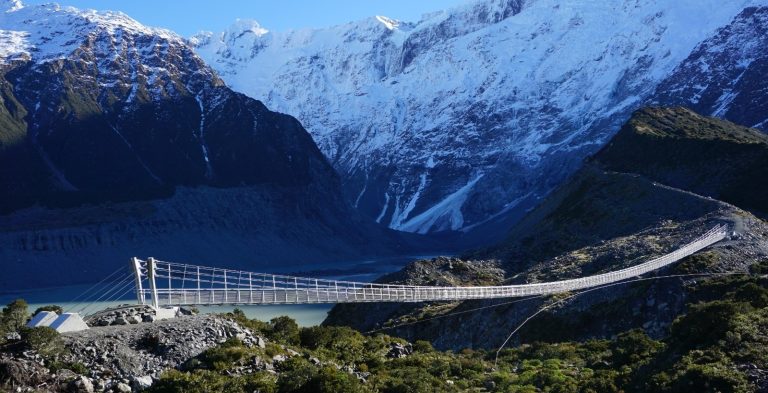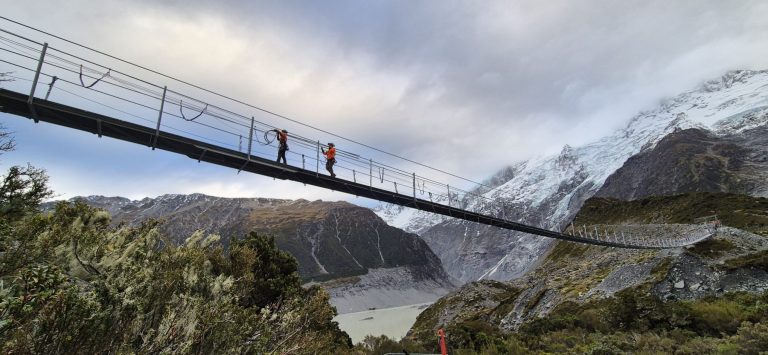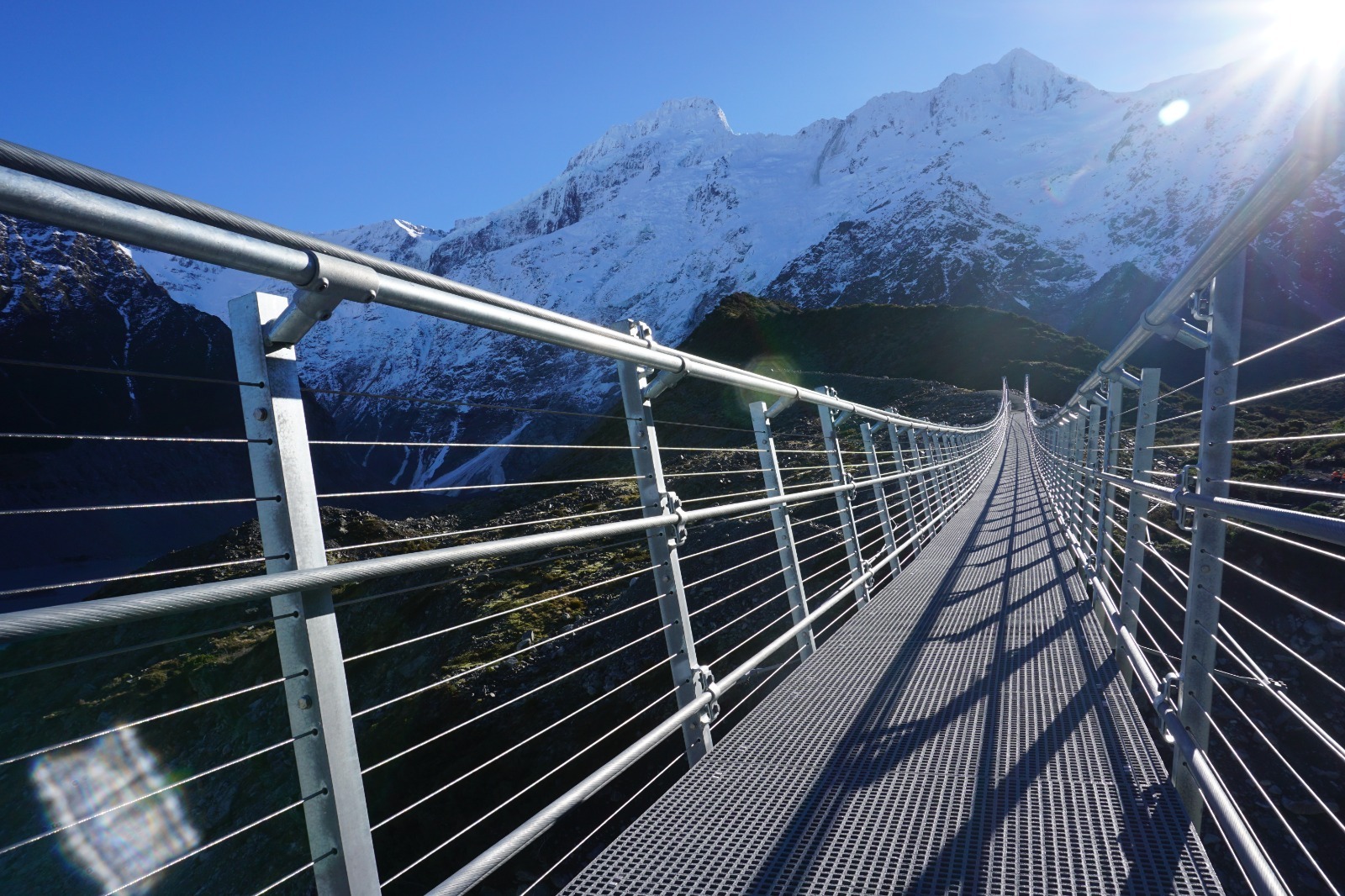
One of our most popular bridges at the moment is our Hooker Valley Mt Cook Aoraki bridge. It’s the longest span pedestrian bridge in New Zealand, and one that has featured a lot in the news with its opening in July 2026. Although the Hooker Valley bridge is most commonly referred to as a suspension bridge, it is in fact a hybrid. Clients always start the conversation with “what actually is a hybrid bridge?” Before we delve into the specifics of a hybrid bridge, let’s look at the other type of bridge spans of similar magnitude:
- Cable-stayed bridges
- Suspension bridges
- Swing bridges
Cable-stayed bridges
Cable-stayed bridges are a good lightweight bridging option, and they offer a distinctive architectural impact. Cable-stayed bridges are not common-place in remote locations, and these bridges are typically reserved for urban areas where more stiffness and architectural merit is required.
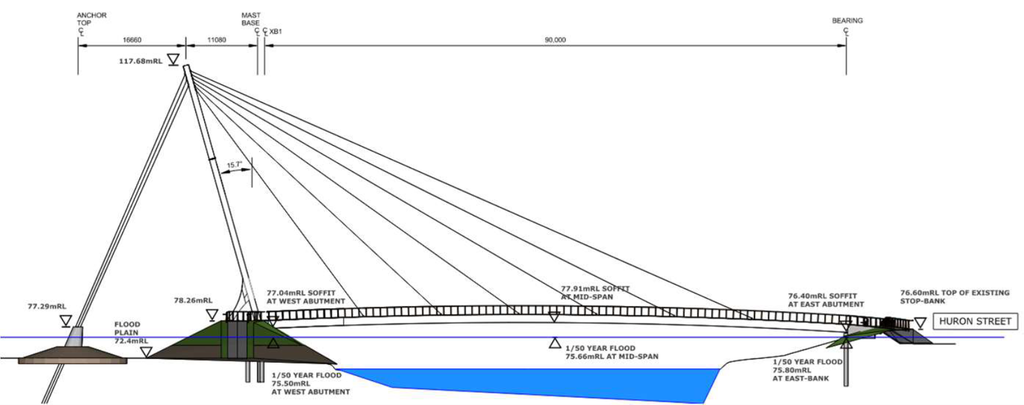
Figure 1: cable-stayed bridge.
Suspension bridges
Suspension bridges are a common solution for lightweight bridges in remote locations. They are normally favoured over swing bridges (discussed below) where clearance is an issue e.g. over a river or a shallow landform. A suspension bridge has high towers (in the order of 1/10th of the span) and enable the deck to have an upward camber. This upward camber enables advantageous clearances over waterways or shallow valleys. Because of the higher masts (compared to swing bridges), they can be more challenging to erect and maintain during the life of the structure. They require abseil access and/or scaffold access to maintain and inspect the masts.

Figure 2: suspension bridge.
Swing bridges
Swing bridges are similar to suspension bridges, with the main difference being that the deck follows the profile of the sagging cable. These bridges are typically more economical to construct and maintain as they result in smaller end masts and more compact foundation footprints when compared to cable-stay and suspension bridges. However, these structures have large sagging curves that extend vertically below the bridge entry location. This approach can often limit their application over shallow valleys and low land profiles adjacent to rivers- the deck profile can clash with the valley floor or incur accumulation of debris forces during floods. Swing bridges have very short towers which are typically the height of the balustrade. A limitation of swing bridges – particularly for longer spans- is the gradient of the deck. Because the sagging deck follows the catenary cable, it is subject to the angles of the main cable and can sometimes result in steep gradients exceeding 10%. This can make them less accessible for a wider range of visitors.
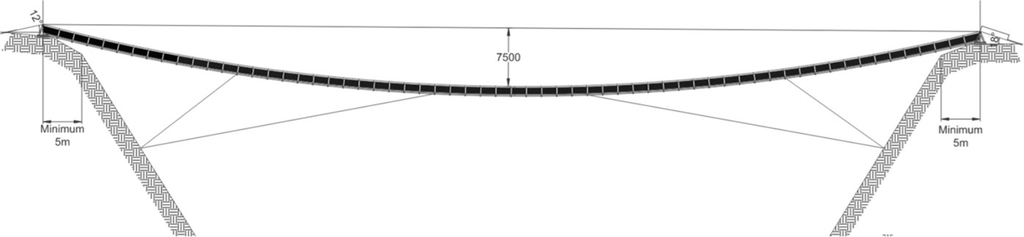
Figure 3: swing bridge.
Hybrid bridges
Our first hybrid bridge was developed for the Hooker Valley at Aoraki Mount Cook. We’ve since used this concept on three bridges for the Great Ocean Road walk (GOR) located in Victoria, Australia (awaiting funding). It combines the economy and easier maintenance of a swing bridge with the improved / tuneable walking gradients of a suspension bridge. It is particularly useful for longer spans where swing bridge walking gradients become too steep at the ends. The central portion (circa 50% of the span) is a pure swing bridge, and the ends are a suspension bridge. This enables total control over the maximum gradients. With this particular 189m span, we transitioned from a swing bridge to a suspension bridge as soon as the gradient reached 5%, which enabled the suspension bridge portions to maintain the 5% gradient rather than making it any steeper. Hybrid masts are much shorter than a typical suspension bridge mast, but higher than a swing bridge mast. This helps them find the sweet spot between easy erection and simpler maintenance (when compared to a suspension bridge), whilst also creating a more impressive “gateway” to the bridge (when compared to a swing bridge). We feel that by taking “the best bits” of a suspension bridge and a swing bridge we are able to combine them into a hybrid bridge that ticks all the boxes.
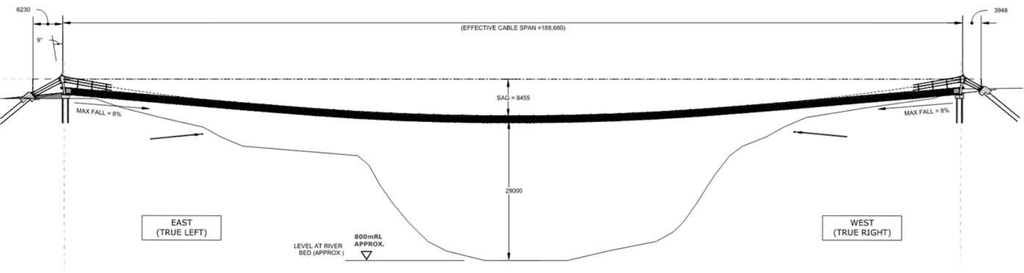
Figure 4: hybrid bridge.
Here at DC Structures Studio, we feel our work on the Aoraki Mt Cook Hooker Valley bridge and the GOR bridges embraces our proven experience adopting our in-house details for:
1) economic and lightweight superstructures and hanger systems
2) economic hybrid masts and connection systems
3) durable and economic rock anchoring systems
4) reliable and safe cable stressing systems
5) lightweight and easily installed and calibrated wind cable systems.
By adopting these proven details we are able to engage low-risk and easily quantifiable systems for pricing purposes, as well as already having optimised helicopter erection processes which are typically required in environments where a hybrid bridge is essential.
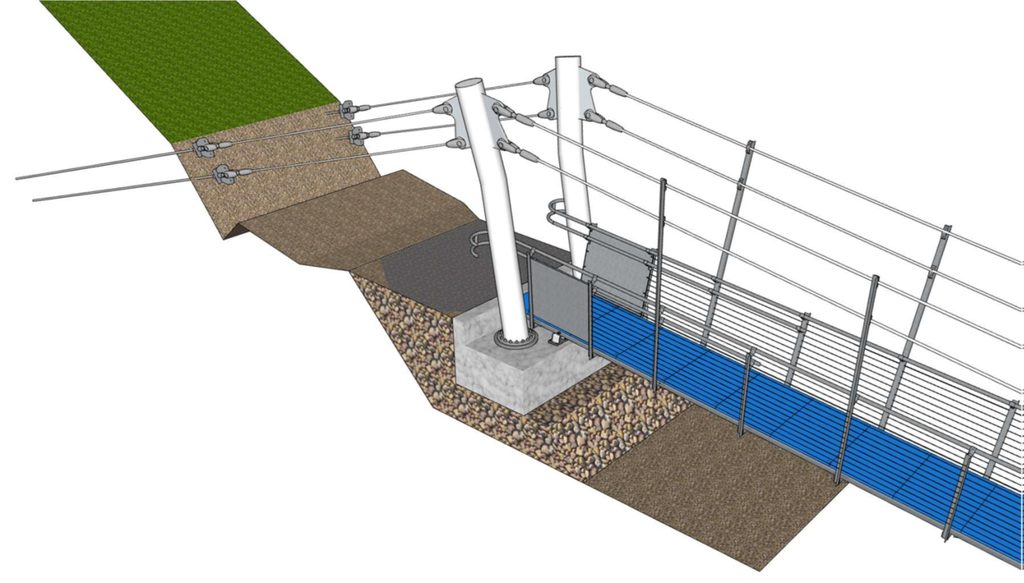
Figure 6: 3D isometric of mast & backstay anchors.
Of course, no bridge is a simple copy & paste solution of previous work. As always, if you need a hybrid bridge we would work closely with your needs and the specifics of the site to create design specifically suited to the location. Get in contact with us if you feel we can help!